
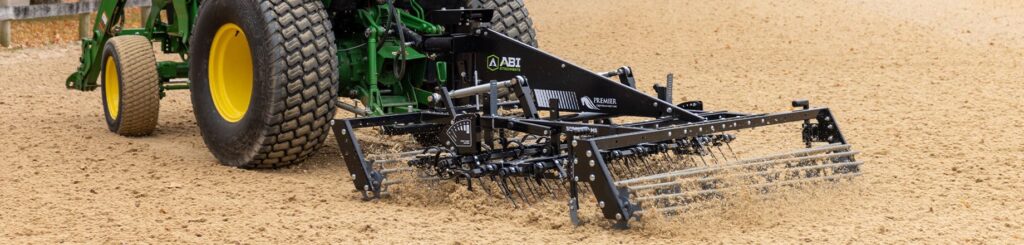
Synthetic footing comes in many shapes and sizes. To get professional-level results in your synthetic arena, you need a groomer built to adapt to your unique setup and needs.
Synthetic groomers aren’t one-size-fits all. There are a variety of considerations that should go into picking the perfect drag for your synthetic arena. Moisture content, particle size, tow vehicle, size of arena, and the additive you’re working with are just a few of the many elements that make your arena unique. And to get the right groomer for your unique set-up, you need an implement that’s designed to be adaptable. That’s why our engineering team crafted the SportPro line of synthetic groomers with over a dozen configurations available, so you can be sure you’re getting the best groomer for your synthetic arena. Don’t settle; get a synthetic drag that’s built to last, and has been engineered to adapt to your needs.
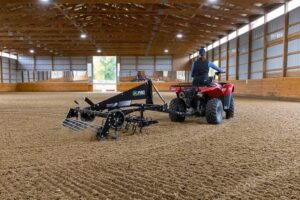
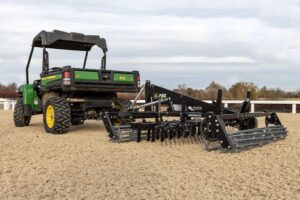
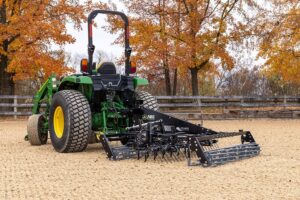
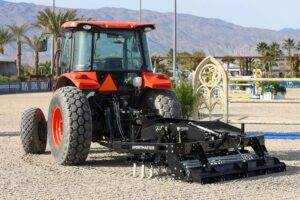
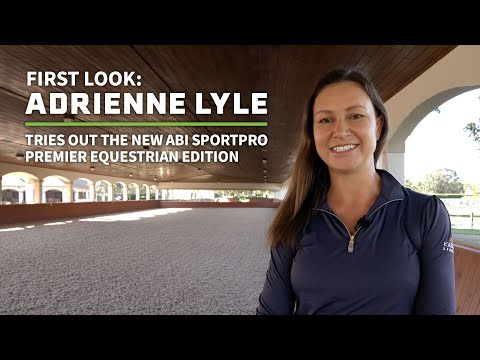
Creating an optimal experience for your horses doesn’t end after you install a synthetic arena. No matter what synthetic arena footing you are working with, your additive pieces and the particles of sand will naturally separate during use. If you’re not doing daily footing maintenance, your horses no longer get the right consistency to ride on, which hinders their training and performance. The SportPro synthetic arena groomer is intentionally crafted to make sure you are able to get the best out of your footing, with every pass.
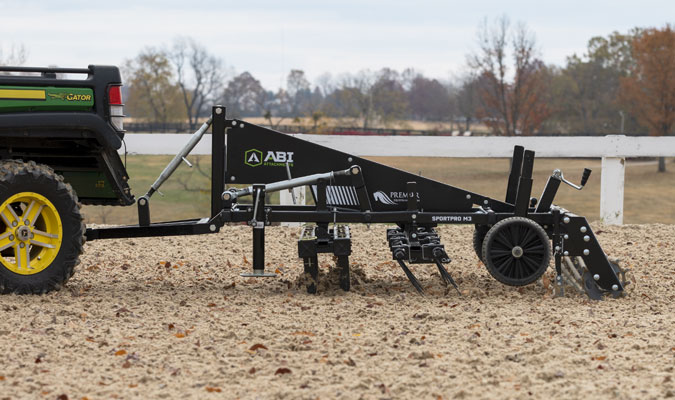
Creating an optimal experience for your horses doesn’t end after you install a synthetic arena. No matter what synthetic arena footing you are working with, your additive pieces and the particles of sand will naturally separate during use. If you’re not doing daily footing maintenance, your horses no longer get the right consistency to ride on, which hinders their training and performance. The SportPro synthetic arena groomer is intentionally crafted to make sure you are able to get the best out of your footing, with every pass.
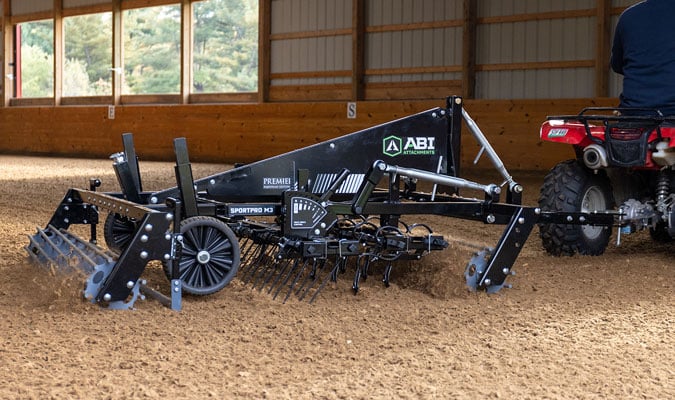
Creating an optimal experience for your horses doesn’t end after you install a synthetic arena. No matter what synthetic arena footing you are working with, your additive pieces and the particles of sand will naturally separate during use. If you’re not doing daily footing maintenance, your horses no longer get the right consistency to ride on, which hinders their training and performance. The SportPro synthetic arena groomer is intentionally crafted to make sure you are able to get the best out of your footing, with every pass.
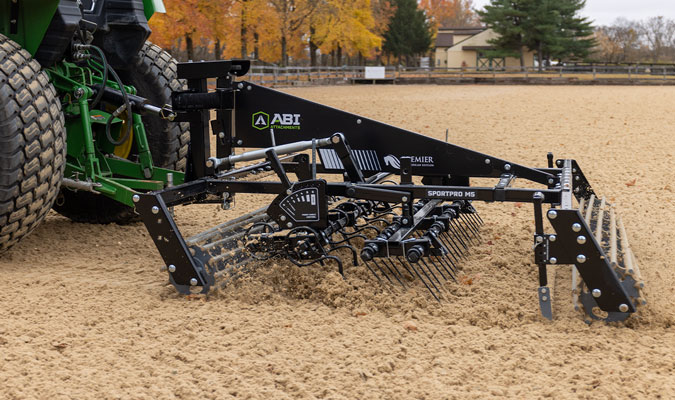
The adaptability of the SportPro makes remixing, renovating, leveling, or adding new fibers to your synthetic arena as simple as adjusting the components from a more passive setting to an active setting. This feature also makes it easy to change the surface tension of your footing for conditioning purposes.
Both riders and their horses deserve footing they can rely on, which means you need a dependable drag that’s built to last. From the tough steel frame, to edging capabilities, to the way your groomer and wear parts will ship to you—no detail is too small if it makes your grooming and riding experience better.
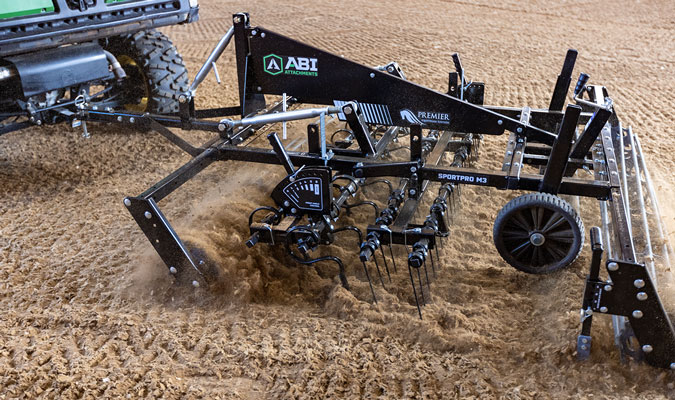
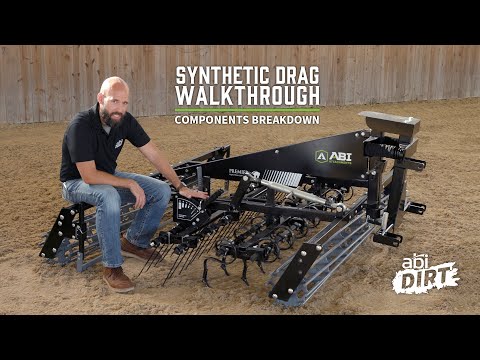
The tough steel frame is built without a shell for increased visibility and to make it easier to reach individual components for any needed adjustments or upkeep.
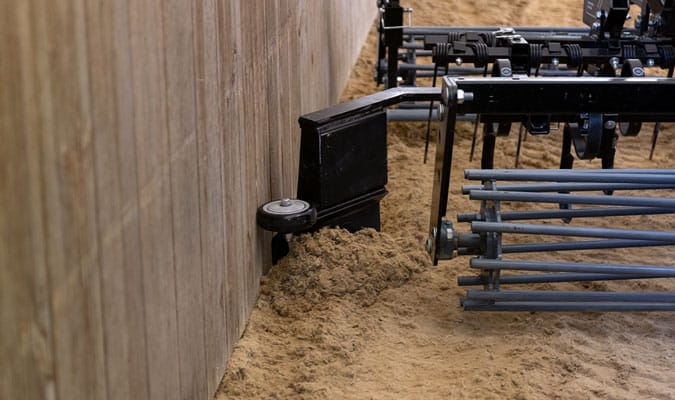
The optional edger blade for your SportPro can get in corners as well as level out excess material that’s built up around your arena. And for extra kick wall protection, you can also add on the rail wheel for extra security when grooming those tough-to-reach places.
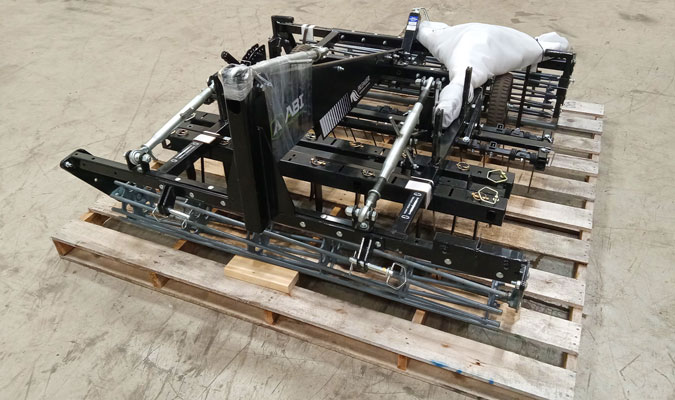
We ship our synthetic groomers, replacement parts, and wear parts from our factory in Indiana directly to you through freight shipping. So you can avoid pricey shipping fees that comes with a drag imported from overseas and you can count on better rates and shorter shipping times.
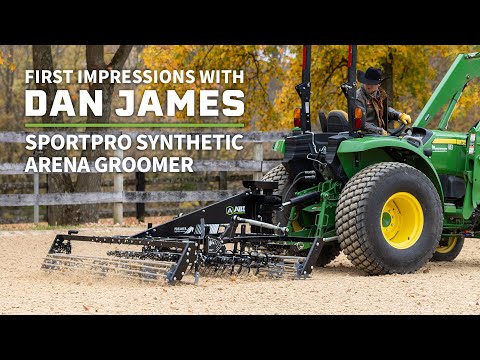
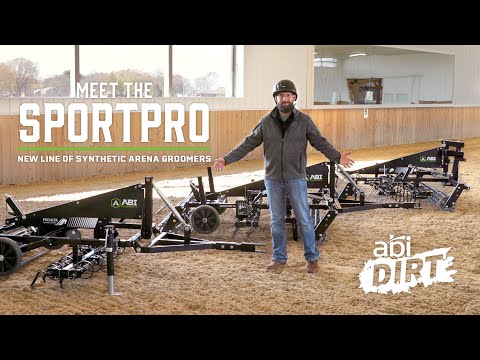
Meet your tow vehicle’s new best friend, the SportPro. The SportPro line has three base models with a range of configurations and sizes, so you can ensure your drag is built to perfectly groom your specific type of synthetic footing—with whatever tow vehicle you choose.
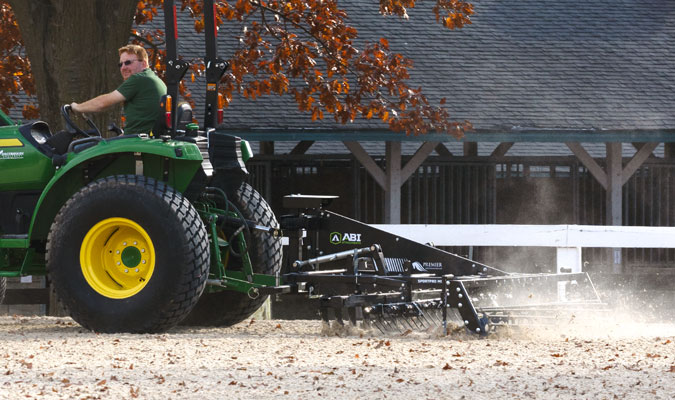
The SportPro M5 models come fitted with a patent pending swivel hitch that precisely follows the turns of the tractor around jumps and rails, and straightens itself before locking when lifted.
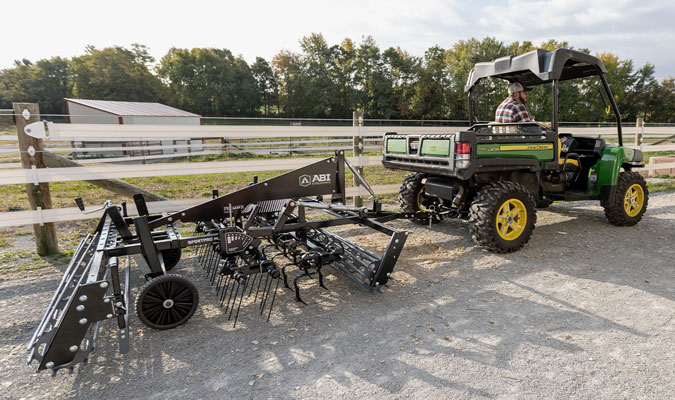
The SportPro M3 models come fitted with a single-point pin or optional ball coupler connection and wheel transport system for easy connect-and-go convenience.
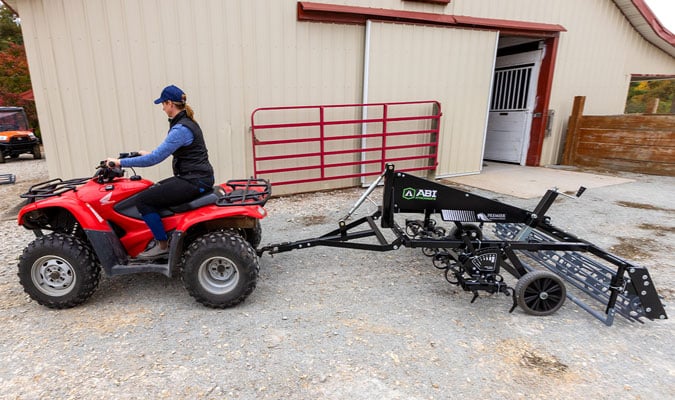
The SportPro M1 model comes fitted with a single-point pin or optional ball coupler connection and wheel transport system for easy connect-and-go convenience.
Keeping a horse arena safe and rideable depends on consistent, proper footing maintenance. The required equipment includes an ATV, UTV, or tractor; a well-engineered arena drag suited to your footing type, a water trailer or other watering system, and a bit of trained know-how. Examples of such equipment from ABI Attachments include the Arena Rascal Pro, TR3e Equine, TR3 Rake, Dragmaster, SpeedMaster, SportPro, SportMaster, and ABI Water Trailers. Please speak with a trained and experienced ABI Attachments product expert at 877.788.7253 for specific guidance.
When referring to the size of an arena drag, people typically mean the drag’s maximum width. It’s rare to size an arena drag solely by the arena’s dimensions. Instead, an arena drag is sized to match the towing vehicle’s capabilities and then double-checked to fit through doors, gates, and around other obstacles, such as jumps. Sizing a drag usually involves CC or horsepower ratings, machine weight, tire type, transmission type, and the type of work to be done in the arena. While a wider arena drag will groom the arena faster, most people must settle for one that best fits their towing vehicle’s capabilities. Additional considerations include multiple arenas, smaller round pens, and other multi-purpose projects. All of these factors influence the decision about how wide a drag to purchase. Please speak with a trained and experienced ABI Attachments product expert at 877.788.7253 for specific guidance.
These and many other terms are often used interchangeably; they all refer to an implement that maintains a horse arena. However, pay close attention to the design of the arena maintenance implement. The design matters, just as athletic shoe design matters, depending on your sport and the surface you compete on. While these terms are used interchangeably, they do not mean the products do the same thing or produce the same results. Please speak with a trained and experienced ABI Attachments product expert at 877.788.7253 for specific guidance.
For most arenas with regular use, dragging is recommended before every ride session, or at least 4–5 times per week. High-traffic arenas at boarding facilities or training centers may require daily grooming, or even multiple times per day. The frequency depends on the footing type (clay compacts faster than sand or sand with additives), the number of horses, and the riding discipline. Arenas used for jumping or barrel racing need more frequent grooming than those used for light trail warm-up. Do not neglect grooming and watering your arena. Horse and rider safety, performance, longevity, and enjoyment all depend on it! A properly maintained horse arena can also lower vet bills and extend the life of the arena investment.
An arena drag is an attachment pulled behind a tractor, ATV, or UTV that grooms and conditions the footing surface of a horse arena. It loosens compacted soil, levels the surface, redistributes footing material, and should consistently blend small and large footing particles, all of which directly affect horse safety and performance. If you ride a horse regularly on dirt, sand, or specialized textile synthetic footings, yes, you need one. Ungroomed footing leads to hard spots, deep spots, and uneven surfaces that increase the risk of slips, trips, and joint stress for your horse. This results in higher vet bills, shorter equine career, and a less fulfilling experience with your horses.


To apply for financing and to learn about our latest financing promotions call 877.788.7253. Financing programs are offered by Sheffield Financial, a division of Truist Bank. Member FDIC. Subject to credit approval. Approval, and any rates and terms provided, are based on credit worthiness. Other financing offers are available. See your local dealer for details. Bureau risk score alone does not guarantee rate eligibility; other underwriting criteria may apply. Minimum amount financed $1500.00; Maximum amount financed $75,000.00. Other qualifications and restrictions may apply. An Origination Fee of $150.00 will be added to the amount financed in the above example. Offer effective on eligible and qualified units purchased from a participating Sheffield dealer. See dealer for product eligibility and qualifications between 8/1/2026 and 10/31/2026. Offer subject to change without notice
No obligation.
Mon-Thurs 8AM – 8PM and Fri 8AM – 5PM EST