When shopping for a manure spreader for sale, one of the first decisions you will make is choosing between a Ground Driven or a PTO Driven (Power Take Off) manure spreader. Compare Ground Driven vs. PTO driven manure spreaders for sale below.
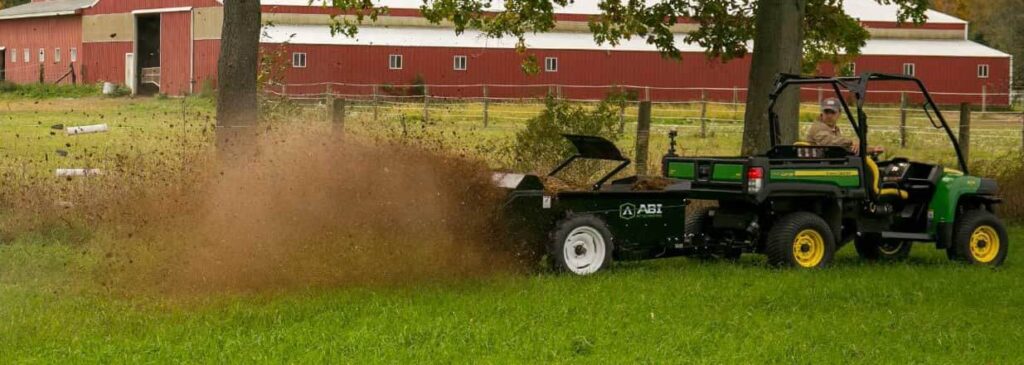
Ground Driven manure spreaders are considered the easiest manure spreader type to use. They’re also the safest as all moving components stop when forward motion stops.
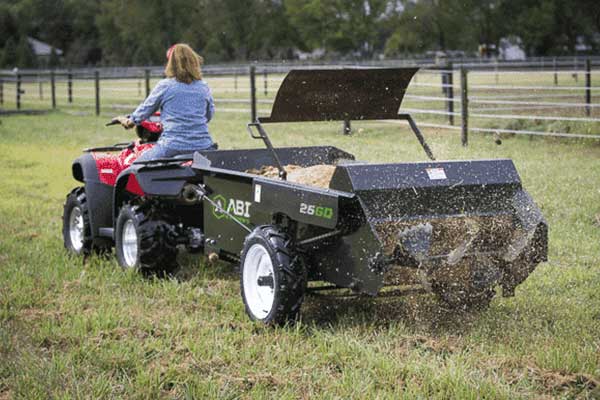
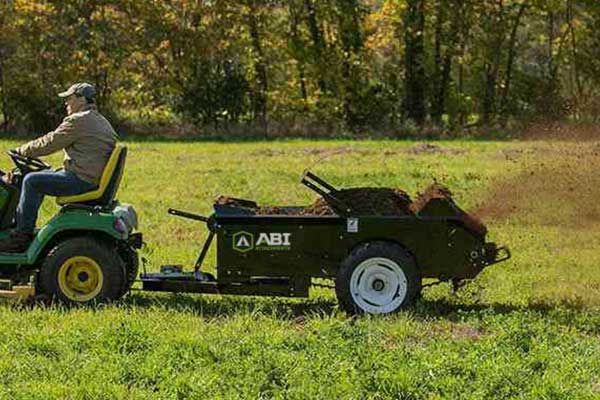
Ground Driven manure spreaders easily connect to smaller and accessible tow vehicles. This makes them common among hobby farmers, horse owners, show stock owners, small ranchers, inexperienced equipment operators and more. In fact, most people buy a ground drive manure spreader for sale unless they require a larger capacity spreader.
Approximately 70% of our customers choose ground driven while 30% select PTO manure spreaders
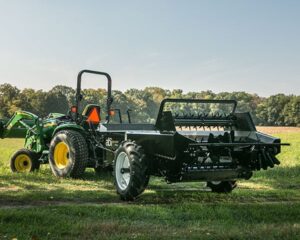
Ground Driven Manure Spreaders are versatile and can be pulled by nearly any type of tow vehicle that meets minimum requirements.
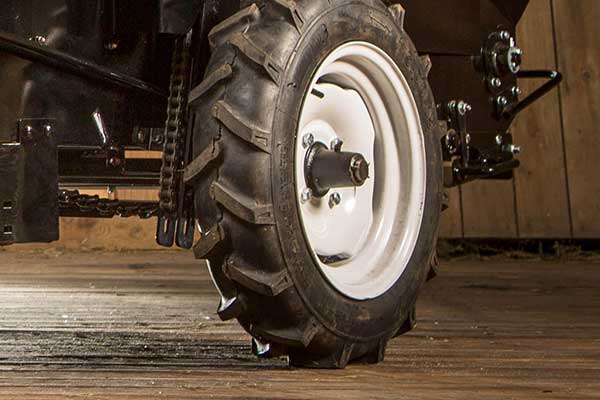
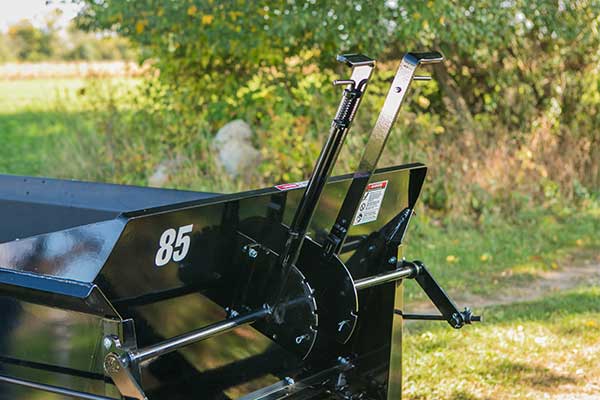
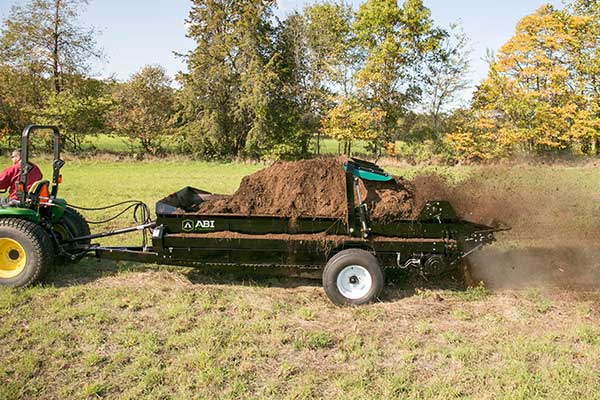
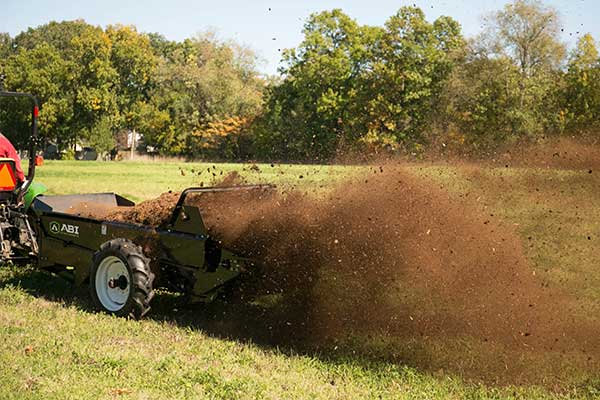
When engaged, the ground driven manure spreader powers itself by pulling it forward with a tow vehicle. The spreader has lug traction tires that grip the ground and transfer forward rolling force, through mechanical gearing, into powering the spreader components. Ground speed controls how fast components move.
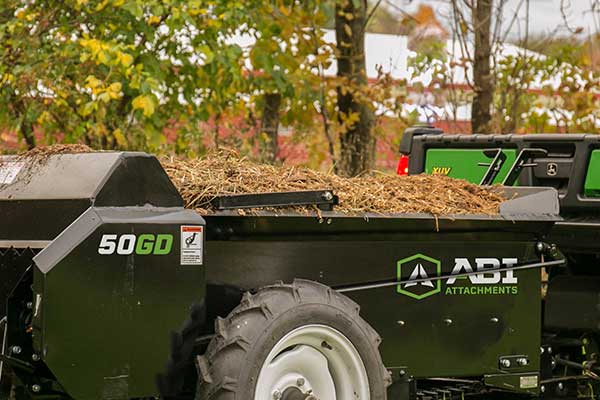
Ground Driven Manure Spreader: Usually smaller in capacity, available in 25, 50, 65, & 85 ft³ models.
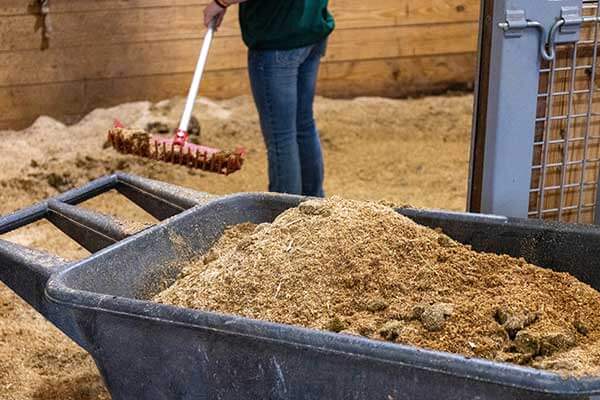
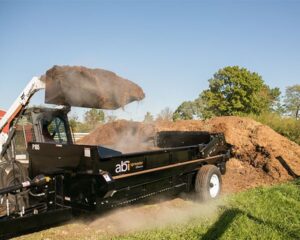
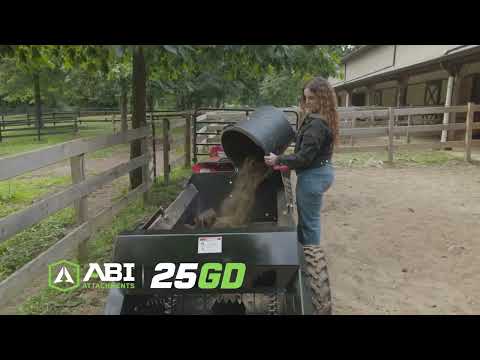
Most small spreaders are loaded by hand tools. The smallest units are not wide enough for loader buck loading. When unloading, a ground driven manure spreader requires forward motion to unload the spreader.
Usually, spreading is engaged and disengaged while stopped and standing at the front of the spreader. The manual levers control spreader operation. Optional end gates are raised by hand.
Ground driven manure spreaders are best for those who spread manure frequently on their property (weekly or monthly). They should not be used in extremely wet, soft, or frozen conditions.
When shopping for a manure spreader for sale, one of the first decisions you will make is choosing between a Ground Driven or a PTO Driven (Power Take Off) manure spreader. Compare Ground Driven vs. PTO driven manure spreaders for sale below.
PTO manure spreaders may be less popular than their ground driven counterparts, but they offer more capacity, performance, and capability. Loved by Equine Training Or Boarding Facilities, Ranches, and other Experienced Equipment Operators, PTO manure spreaders are great fits for large and specialized scenarios.
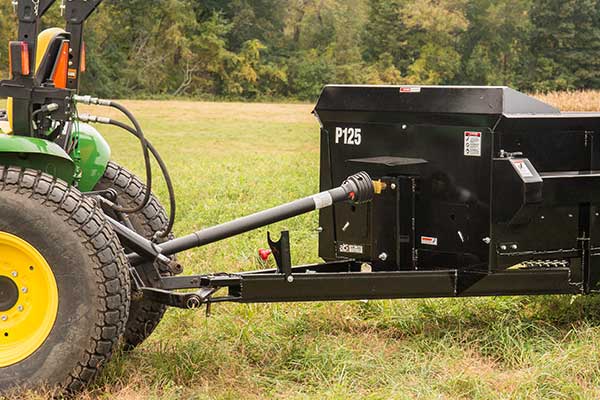
Power take off manure spreaders require connection to the tractor PTO shaft. Operating and connecting to a tractor is undesirable for some people, but not all. PTOoperated farm equipment requires additional safety considerations. Never leave the tractor running while you or someone else is connecting, disconnecting, or working around the spreader.
PTO manure spreaders are harder to handle, but in the hands of the right operator, they’re excellent at shredding and spreading manure fast.

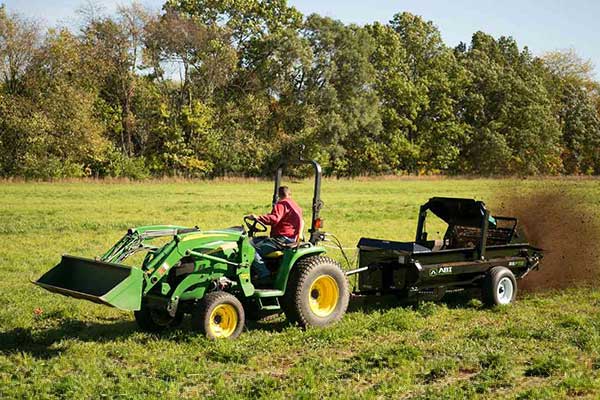
PTO Driven Manure Spreaders require a tractor with a rear PTO (Power Take Off) that meets minimum requirements.
PTO Driven Manure Spreaders are usually larger in capacity. At ABI, we have them available in 50, 85, 125, & 185 ft³ models.
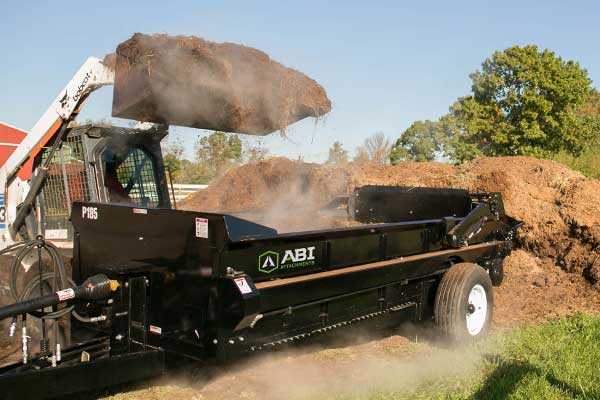
Most small spreaders are loaded by hand tools. The smallest units are not wide enough for loader buck loading. When unloading, a ground driven manure spreader requires forward motion to unload the spreader.
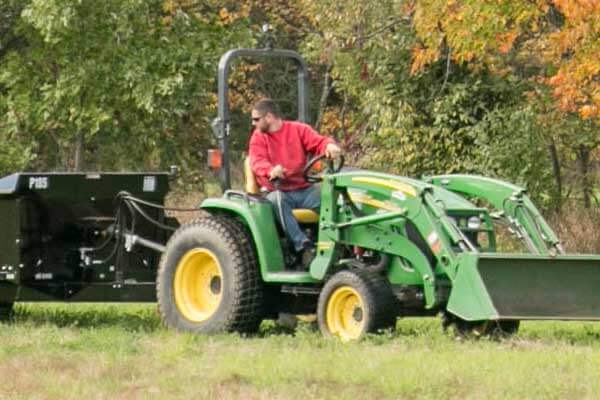
Spreading is engaged and disengaged while moving and seated on the tractor. The tractor’s engine throttle, PTO switch, and the spreaders pull rope control spreader operation. Optional end gates are hydraulically raised by the tractor.
PTO manure spreaders are used to spread manure only a few times per year. Unlike with ground driven manure spreaders, the weather conditions do not impact the ability to spread.
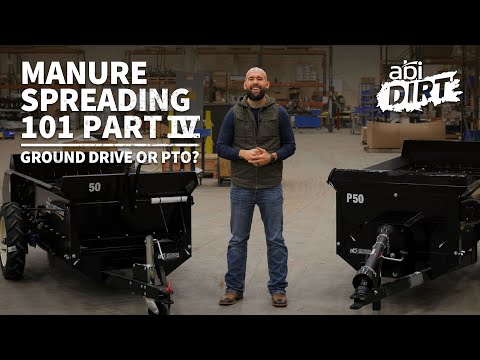
In many ways, choosing between a ground driven and pto driven manure spreader comes down to your unique needs, skill level, and preferences. Watch this video for more information about choosing which is right for you. Then, contact our specialists with any questions before you buy!